

The 30-second answer: Water in gasoline separates out and sinks to the bottom of the tank, where the fuel pickup draws from. The usual signs are a rough idle, stalling under load, and a hard start after the unit has sat. Confirm it with a jar sample from the tank drain, drain the tank and carburetor bowl, clean the filter, and refill with fresh fuel.
Most gasoline sold today contains ethanol, and ethanol attracts water from the air. Water mixes into the fuel at first, but once enough collects, the mix can no longer hold it. The water then separates out as a layer under the gasoline. Because water is heavier than gasoline, it sits at the bottom of the tank, and that is exactly where the fuel line pickup sits. The engine then burns a mix that the carburetor was never designed to handle.
Why Ethanol Fuel Picks Up Water
Ethanol absorbs water from moist air, and it also carries water into the tank from the fuel supply. A tank that is only partly full has more air space, and that air holds moisture. Every time the cap is opened on a damp day, more moisture can get in. Over weeks and months, a tank that sits partly full in a humid place builds up water. Fuel that has been stored for a season is the most common source of trouble, but a fresh tank can also contain water if the fuel came from a bad batch.
Ethanol blends also break down over time. The gum and varnish that forms as the fuel ages clogs the same small passages that water affects. That is why a generator with water in the tank often has varnish in the bowl as well. Dealing with one usually means dealing with both.
Step One: Look for the Signs
Water in the fuel usually shows up as a generator that runs fine on a fresh start, then starts to sputter after a few minutes. Other signs include:
- A rough or uneven idle that gets worse as the tank gets low
- Surging or stalling when the load goes on
- Hard starting after the unit has sat for a few weeks
- Fuel that smells sour, looks cloudy, or has a different color at the bottom of a sample
- A tank with a layer of standing liquid you can see through the drain
Many of these symptoms overlap with a clogged carburetor and a bad fuel filter, so the next step is the one that tells you for sure.
Step Two: Run the Jar Test
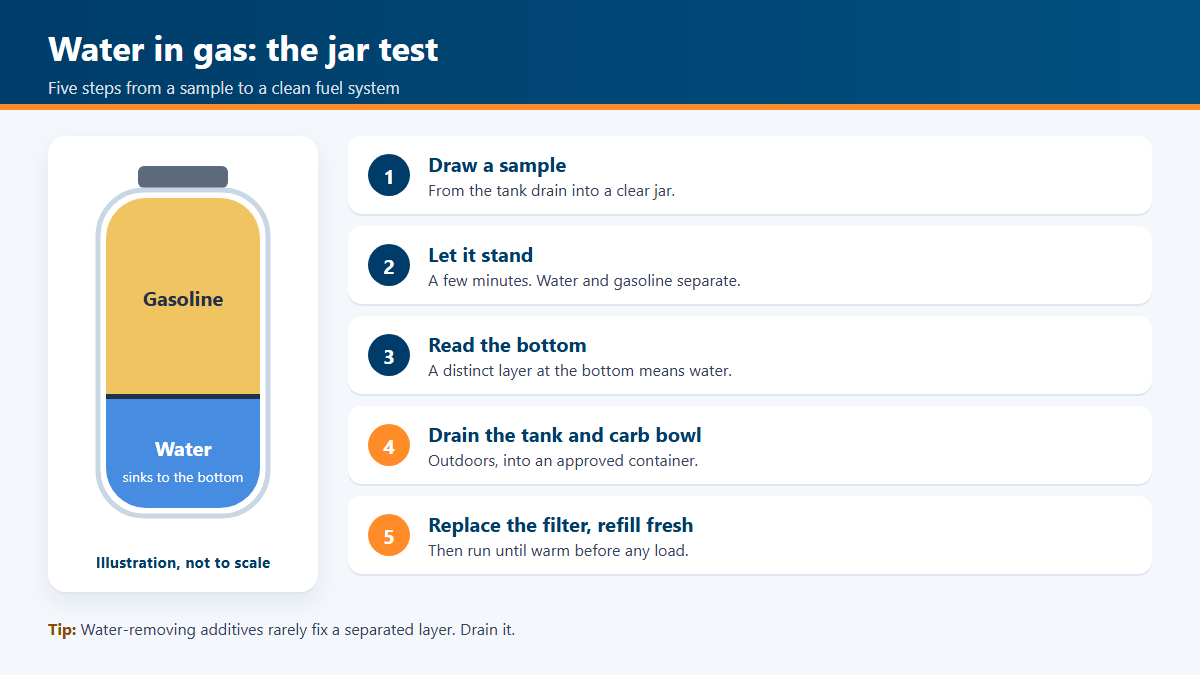
With the engine cold and the unit level, drain a small amount of fuel from the tank drain, or from the bottom of the tank if your model has no drain, into a clean clear jar. Let it sit for a few minutes. Water and gasoline separate into two layers, and the water sits at the bottom. The illustration below shows what to look for.
A thin layer of water is enough to cause trouble, because the pickup can draw it in before you notice it. If the sample is clean and bright all the way to the bottom, the water is probably not the problem, and you should look at the filter and carburetor instead. Test the fuel from the tank, not from a can, because the can may be clean while the tank is not.
Watch: “Testing for Water in Gasoline” by Garage Gurus on YouTube. A quick water-in-fuel test from an auto repair channel. The idea is the same for a generator tank: let the sample settle and look for a layer at the bottom.
Step Three: Drain the Tank and Fuel Line
Drain the contaminated fuel into an approved gasoline container, outdoors, away from any ignition source. Never pour it on the ground or into a drain. Some tanks have a drain plug with a small check valve in it. If fuel stops before the tank is empty, push the valve open with a small screwdriver, but do it slowly, because fuel will run out. If the tank has no drain, a clean siphon hose run to the bottom can remove the water, though it takes patience and you should keep the siphon outdoors with the engine off.
Water that is left in the tank can sit there for a long time, and it will not drain out through the fuel hose on its own. If the tank has a thick layer of sludge or rust at the bottom, the tank needs cleaning, not just a drain. The fuel tank rust cleaning guide covers that job. The guide to draining old gas covers the steps for each type of tank and fuel shutoff.
Step Four: Clean the Carburetor Bowl
Water and varnish settle in the carburetor bowl as well. Remove the bowl drain screw and let the bowl empty into your container, then check the jets and the float for debris or residue. Most bowls have a drain screw at the bottom, and some are at an angle, so look at the carburetor before you start. If the bowl is coated or the jets are blocked, a full cleaning is needed. The carburetor cleaning guide covers the process, and the rebuild or replace guide helps you decide when cleaning is not enough.
Do not use a wire to poke the jets unless the carburetor guide tells you to. A wire can enlarge a jet and change the mixture for good. Use carburetor cleaner and compressed air, and keep the parts in order so you can reassemble them correctly.
Step Five: Replace the Filter and Refill
Replace the in-line fuel filter, since it will have trapped water and debris. The fuel filter replacement guide shows where it sits and which way it faces. Check the fuel line and the shutoff valve while you are there, because a cracked line or a stuck valve can add air to the mixture. The fuel valve guide covers that check.
Refill with fresh gasoline. Buy only as much as you will use in a month or two, and use ethanol-free fuel if your area sells it, as the ethanol-free fuel guide explains. Run the engine for several minutes to pull fresh fuel through the carburetor before you put it under load. If it runs rough for the first few minutes, that is normal while the bowl fills with clean fuel.
Step Six: Test the Repair
Run the generator at idle, then under a light load, and watch for the symptoms you noted in Step One. A repair that worked will show a steady idle, no surging, and a normal start. If the rough running comes back within a few runs, water may still be in the tank or the lines, or the carburetor may need a full cleaning. Recheck the jar test before you assume the problem is solved.
Preventing the Next Problem
- Keep the tank full when the unit is stored, so less air sits above the fuel to collect moisture.
- Store the generator in a dry place, away from the ground and out of wet weather.
- Use fuel within a month or two, and add a stabilizer if the unit will sit for longer.
- Drain the tank and carburetor before a long storage period, unless the manual says otherwise. The off-season storage guide compares the options.
Gasoline vapor ignites easily. Drain and refill outdoors, with no smoking, sparks, or open flames nearby. Keep a fire extinguisher close by, wipe up spills at once, and store old fuel in an approved container, not a milk jug.
Frequently Asked Questions
Can a fuel additive fix water in the gas?
Usually not once the water has separated. Some products claim to fix water, but they work best on small amounts that are still mixed in. A layer at the bottom of the tank needs to be drained. Read the product label carefully and treat any claim of instant water removal with caution.
How much water does it take to cause problems?
Even a small layer at the bottom of the tank can cause rough running, because the pickup draws from there. There is no safe amount to ignore.
Will the engine be damaged if I keep running it?
It can be. Water and varnish can stick the carburetor float and block jets, and continued running with a lean or erratic mixture can overheat the engine. Stop and drain the system as soon as the symptoms show up.
Can I use the fuel after I have run the jar test?
If the sample is clean, the fuel is probably fine, but check its age. Old gas that smells sour or has varnish should be drained, even if no water shows.
Is water in the gas a warranty issue?
Fuel contamination is usually not covered by a warranty, because the cause is the fuel and storage. Keep your fuel purchase dates and maintenance records in case a claim is ever needed, and read the warranty terms in your manual.