
The generator runs fine in the driveway. Then you take it to a cabin at 6,000 feet, or run it on a hot July afternoon, and it feels weak. The lights dim, the engine labors, and a load that worked at home trips the breaker. Thin air and hot air both cut the power an engine can make, so some loss is expected. The useful question is how much loss is normal, and when it has become a fault.
The 30-second answer: Some loss is normal. A common starting estimate for portable gas units is about 3 percent less output for every 1,000 feet of elevation. The owner’s manual has the real figure for your model. If the unit is rated for your elevation and still bogs down, check the carburetor, the air filter, and the cooling airflow.
- Thinner air holds less oxygen, so less fuel burns and less power comes out. Heat thins the air too.
- Expect some loss. The manual’s rating for your model is the number to plan around.
- A carburetor set for sea level runs rich at altitude. Black smoke and a sooty spark plug are the signs.
Why Thin Air Costs Power
An engine makes power by burning fuel with air. Thinner air carries less oxygen into each cylinder, so less fuel burns. The carburetor meters fuel by how much air is moving through it. With thinner air, the same settings deliver a richer mix. That’s why a generator set up for sea level often runs rough once it’s taken up a mountain.
How Much Power to Expect
Sources don’t agree on one number, and some manufacturers publish their own curves. For portable gasoline units, a common rough estimate is about 3 to 3.5 percent per 1,000 feet above sea level. The output rating guide at GeneratorSource explains how the ratings are set.
Take a 3,500-watt unit used at 6,000 feet. At 3 percent per 1,000 feet it loses about 18 percent, which leaves roughly 2,870 watts. At 3.5 percent it loses about 21 percent, or roughly 2,765 watts. Plan your loads around that lower number, not the sticker.
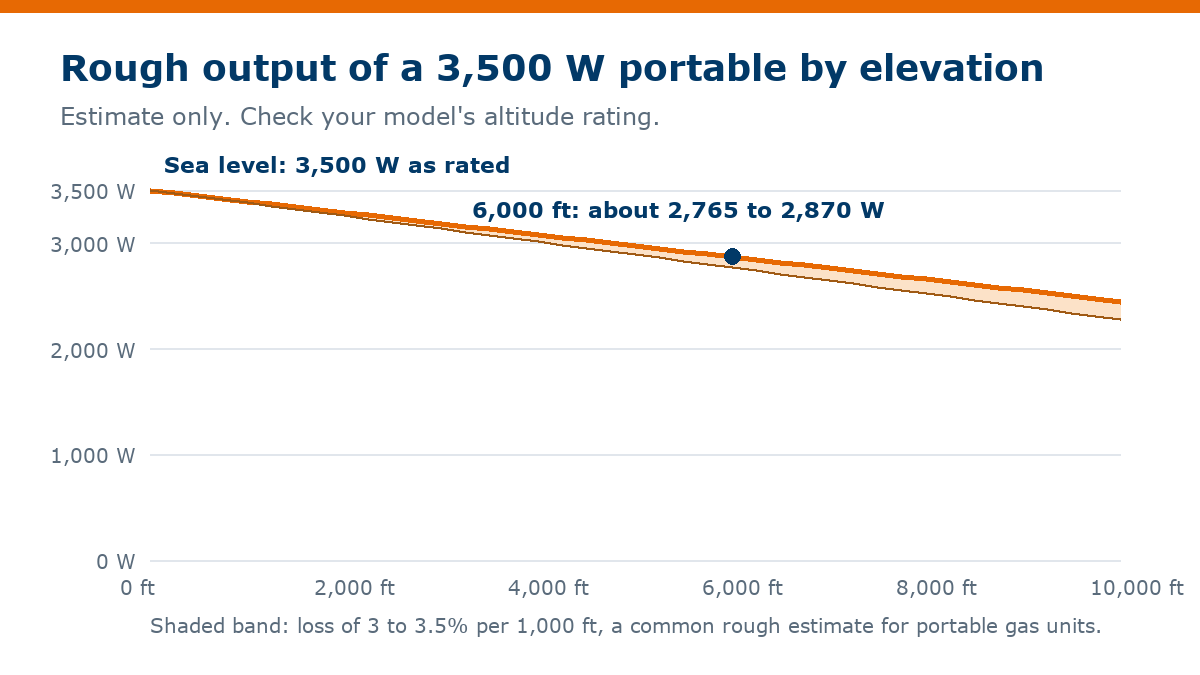
| Elevation | Rough output for a 3,500 W unit | What to do |
|---|---|---|
| Near sea level | About 3,500 W | Run it as rated. |
| 3,000 feet | About 3,200 W | Keep some margin on large loads. |
| 6,000 feet | About 2,870 W | Check the altitude rating and size loads with margin. |
Some units hold full rated power up to a set height and then drop off faster. The manual or spec sheet tells you which kind you have.
Heat Works the Same Way
Hot air is thinner, so a hot afternoon costs power just as altitude does. Heat also adds a second problem: the engine runs hotter and can shut itself down. If the generator quits after an hour in the sun and starts again once it cools, you’re looking at a cooling problem. Keep the intake and exhaust clear, and keep the unit away from walls. The overheating guide covers the shutdown in detail.
Check the Carburetor First
Altitude shows up most in the jetting. A carburetor set for sea level runs rich when the air is thin. The signs are black smoke, a sooty spark plug, and surging or bogging under load. The smoke color guide helps you read the exhaust.
Some manufacturers sell high-altitude jets or publish a setting procedure. Follow the manual exactly, or leave the jetting alone. Guessing at jet sizes can run the engine lean and hot, which is more dangerous than running it rich. Clean the carburetor and use fresh fuel before you touch anything else. The carburetor cleaning walkthrough covers the steps.
WEN’s video walks through installing a high-altitude kit on its carburetor. Kits are model-specific, so use the manual for your own unit before you buy one.
Air Filter and Spark Plug
A dirty air filter cuts airflow, and at altitude every bit of airflow counts. Pull the filter and check it in good light. Clean or replace it if it’s clogged with dust or oil. A worn or wrongly gapped spark plug also loses power, and thin air shows the fault sooner. The air filter guide and the spark plug guide cover both checks.
Test the Output Before Blaming the Engine
Sometimes the engine is fine and the load is too close to the limit for that elevation or temperature. Measure the voltage at the outlet with a multimeter while the load is running. If the voltage holds and the engine runs smooth at a lighter load, the unit is working. The multimeter output test shows the steps. The surging guide has a load test that separates a fuel problem from a plain overload.
Thin air doesn’t make the exhaust any safer. Run the unit outdoors, away from doors, windows, and vents. Read the carbon monoxide safety guide before you run a generator at a cabin or campsite.
Frequently Asked Questions
Does a generator lose power in hot weather?
Yes. Hot air is thinner, so the engine makes less power on a hot day than on a cool one. Heat also raises the risk of overheating, so keep the airflow clear.
How much power do I lose at 5,000 feet?
Using the rough 3 percent per 1,000 feet estimate, about 15 percent. Your manual gives the real figure for your model.
Do inverter generators lose power at altitude too?
Most do, because the engine still needs air to burn fuel. Check the rating for your specific model.
Can I adjust the carburetor myself?
Only if the manual gives a procedure and you know what you’re changing. Changing the jetting by guesswork can run the engine lean and hot.