
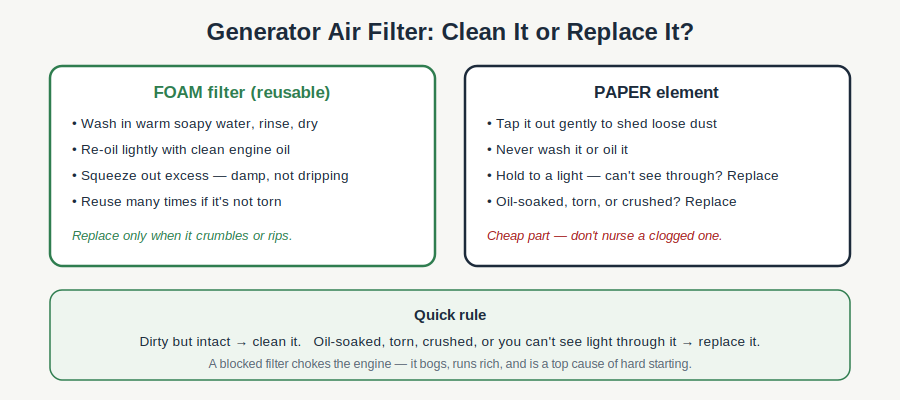
Whether you clean a generator air filter or replace it comes down to the type and its condition. A foam filter is reusable: wash it in warm soapy water, dry it, and re-oil it lightly with clean engine oil. A paper element can only be tapped out — never washed or oiled — and gets replaced once it’s oil-soaked, torn, crushed, or so clogged you can’t see light through it. Dirty but intact, clean it; soaked or damaged, swap it. The part is cheap, and a blocked filter is a top cause of hard starting and bogging.
- Foam = washable. Soap, water, dry, then a light coat of clean oil squeezed damp (not dripping).
- Paper = replace. Tap out dust, but never wash or oil it. Hold it to a light — if light won’t pass, it’s done.
- Replace either one when it’s oil-soaked, torn, or crushed — don’t nurse a damaged filter.
- A clogged filter chokes the engine: hard starts, bogging under load, black smoke, running rich.
- Check it at every oil change and after dusty jobs — it’s a two-minute look.
Can You Clean a Generator Air Filter, or Do You Replace It?
You can clean a foam filter and reuse it many times; a paper element you clean only lightly and replace when it’s spent. The deciding factor is which type your generator uses and what shape it’s in. Foam elements — common on smaller portables and as pre-filters — are designed to be washed and re-oiled, so unless one is falling apart you clean it and put it right back. Paper elements, used on a lot of mid-size and larger units, are a different animal: the pleated paper traps fine dust you can’t wash out without wrecking it, so you knock the loose dirt off and replace it on a schedule or whenever it’s dirty enough that light won’t pass through the pleats. I’ve pulled filters out of stored generators that were so caked the engine could barely breathe, and a $6 element fixed a “won’t run right” complaint on the spot. So the honest answer is: clean the foam, replace the paper, and replace anything that’s torn or oil-logged regardless of type.
Cleaning a Foam Filter
This is a five-minute job. Pop the air box cover, pull the foam element, and wash it in warm water with a little dish soap, working the grime out until the water runs clear. Rinse it, squeeze it gently — don’t wring or twist it or you’ll tear it — and let it dry completely. Then put a small amount of clean engine oil into the foam and squeeze it through until it’s evenly damp, not dripping. That oil film is what actually catches the dust, so don’t skip it, but don’t drown it either — too much oil restricts airflow and can get sucked into the engine. Reinstall it, seat the cover, and you’re done.
When the Paper Element Just Needs Replacing
For a paper filter, hold it up to a light. If you can see light through the pleats, a gentle tap on a hard surface to shake out loose dust buys you more time. If you can’t see light, or it’s gray-black, oil-soaked, torn, or crushed, replace it — these cost a few dollars and there’s no upside to running a clogged one. Don’t wash a paper element and don’t oil it; water and oil both ruin the paper and it’ll come apart or restrict airflow. Keep a spare on the shelf so a dirty filter never sidelines you during an outage.
How a Dirty Filter Shows Up
A choked filter starves the engine of air, which throws the fuel mixture rich, and that shows up in ways people often misdiagnose. It gets hard to start, it bogs or stumbles when you put a load on it, it may blow black smoke, and it can foul the spark plug. Before chasing the carburetor or ignition for those symptoms, pull the filter and look — it’s the fastest thing to rule out. If the filter’s clean and it’s still hard to start, then move on to the carburetor and plug; the related causes are walked through in why a generator is hard to start. And since a rich-running engine fouls plugs, it’s worth checking the plug too, covered in reading, gapping, and replacing the plug.
Never run the generator with the filter removed “just to test it” — unfiltered air pulls dust and grit straight into the cylinder and accelerates wear fast. Don’t over-oil a foam element; excess oil restricts airflow and can be drawn into the intake. And never wash or oil a paper element — it destroys the filter. If you’re also fighting a no-start, the filter and the carburetor are the two cheapest places to start, and the carb work is in how to clean a generator carburetor.
What It Costs
This is bottom-of-the-barrel cheap. A replacement paper element is usually a few dollars to $15, foam refills even less, and the only “tool” is dish soap and a little oil you already have. Against that, a chronically starved engine runs rich, fouls plugs, and wears faster — all preventable by a part that costs less than lunch. There’s no reason to pay a shop for this; it’s a two-minute look and a five-minute clean, and keeping a spare element on hand means it never becomes a real problem.
Frequently Asked Questions
Can you wash a generator air filter?
You can wash a foam filter — warm soapy water, dry it, then re-oil it lightly. You cannot wash a paper element; water ruins the paper, so those only get tapped out and replaced. Check which type yours is before you reach for the sink, and when in doubt with a paper one, just replace it.
How often should I change a generator air filter?
Check it at every oil change and after any dusty job, and replace a paper element when it’s clogged, torn, or oil-soaked — typically every season of regular use, sooner in dusty conditions. Foam filters get cleaned on the same schedule and replaced only when they tear. I keep a spare element on the shelf so it’s never the thing that stops me.
What happens if I run a generator with a dirty air filter?
It starves the engine of air and runs rich, which makes it hard to start, bog under load, blow black smoke, and foul the plug. None of that is good for the engine, and it’s all fixed by cleaning or swapping a cheap filter. If yours is acting up, pull the filter and look before chasing anything more expensive.
Should I oil a foam generator air filter?
Yes — a foam element needs a light coat of clean engine oil to actually trap dust, applied after it’s washed and fully dry. Squeeze it through until it’s evenly damp, not dripping, because too much oil restricts airflow and can get drawn into the engine. A dry, un-oiled foam filter lets fine dust pass right through.
Can you run a generator without an air filter?
You shouldn’t, even briefly. Without the filter, the engine inhales dust and grit straight into the cylinder, scoring the bore and wearing the rings fast. If your filter is dirty, clean or replace it rather than removing it — running unfiltered trades a cheap part for expensive engine wear.