
A generator that runs rough — stumbling, hunting, misfiring, or lacking power — has a fuel-air mixture problem in 80% of cases. Fresh fuel first, air filter second, then carb cleaning. Rough running that started suddenly points to fuel; rough running that developed gradually usually points to the air filter or a plug that’s been in there too long.
Generator Runs Rough — Read the Symptom Before You Open Anything
Rough running isn’t one symptom — it’s several, and they point to different causes. A rhythmic rev-hunt (surging up and down at idle) is almost always the pilot jet in the carb. A stumble and bog when you apply load is usually the main jet. A random misfire under any condition points to the spark plug or ignition system. A rough run that gets better as the engine warms up is usually old fuel or a choke that’s not opening fully. A rough run that gets worse as it warms up is usually a heat-related issue: a deteriorating plug, an air leak, or a valve clearance problem. The fuel-air mixture problems cover roughly 80% of rough running complaints; the mechanical ones (valves, rings, compression) are less common and show up with other symptoms like excessive smoke or hard starting.
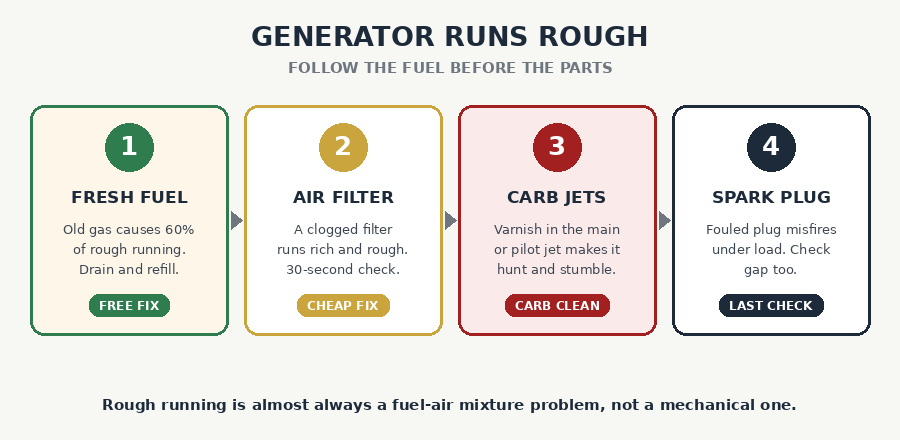
Fresh Fuel and the Air Filter — Free Fixes First
Stale fuel causes rough running that feels mechanical but isn’t. If you’re not sure how old the fuel is, drain it and put in fresh before anything else — the draining procedure is at draining old gas from a generator. An air filter that’s been in service more than a season creates a rich mixture by restricting the air side — the engine gets too much fuel for the air available and runs rough, especially under load. Pull the filter and hold it up to the light. If you can’t see through it, replace it. A new filter for most generators runs $4 to $8. The filter guide is at generator air filter guide.
The Spark Plug — Check It Before the Carb
Pull the plug and read it. A healthy plug is tan to light brown. A black, sooty plug is running rich — too much fuel, usually a stuck choke or dirty air filter. An oil-fouled plug (wet and black) means oil is getting into the combustion chamber. A white or blistered plug is running lean or hot. A cracked insulator or eroded electrode causes misfire. The full plug reading and replacement guide is at generator spark plug guide. A new plug is $4 — if the old one is more than two seasons old, replace it whether it looks bad or not.
Carb Cleaning for Rough Running
If fresh fuel and a new plug didn’t fix it, the carburetor needs attention. Rough running from the carb is usually the pilot jet (idle/low-throttle circuit) or the main jet (full-load circuit), or both. The pilot jet is the small secondary orifice next to the main jet in the carb body — it’s even smaller than the main jet and clogs first. Spray carb cleaner into the bowl area with the bowl removed and see if it flows freely out the pilot orifice in the carb throat. If not, soak and clear it. The full carb cleaning procedure is at clean a generator carburetor. A rough-running engine that refuses to smooth out after a thorough carb cleaning usually has a vacuum leak at the carb-to-engine interface — check that the carb mounting bolts are tight and the gasket isn’t cracked.
This covers rough-running diagnosis on a small engine in the right order:
Frequently Asked Questions
Why does my generator run rough and lose power?
Fuel delivery restriction — usually a partially clogged main jet or a fuel valve that can’t supply enough flow at full load. Fresh fuel first, then confirm strong fuel flow from the valve, then clean the carb’s main jet. That sequence fixes the vast majority of rough-run-plus-power-loss complaints.
Why does my generator surge up and down?
The pilot jet is starving the idle circuit — the engine can’t find a stable air-fuel ratio at low throttle. Clean the pilot jet specifically (it’s smaller than the main jet and clogs first), and check that the idle mixture screw is set correctly. Surging is covered in detail at generator surging fixes.
Can bad gas make a generator run rough?
Yes — it’s one of the most common causes. Stale gas loses its lighter volatile fractions and doesn’t atomize cleanly in the carb, especially in cold weather. Ethanol-blend fuel that’s absorbed moisture runs rough and causes hesitation. If you’re not sure how old the fuel is, drain and replace it before opening anything.
Also relevant: generator runs rough.