

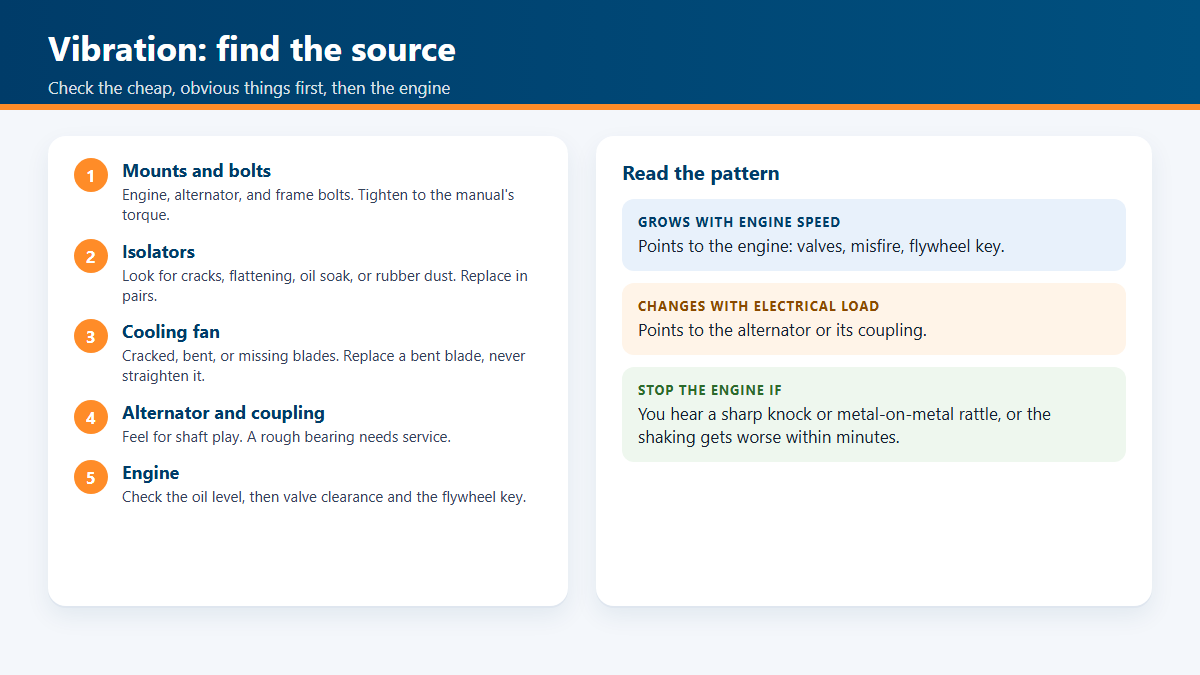
The 30-second answer: Start with the cheap checks. Tighten the bolts on the engine, the alternator, and the base, and look at the isolators under the frame. Then check the cooling fan for cracks or debris. Vibration that rises with engine speed usually points to the engine. Vibration that changes with the electrical load points toward the alternator or its coupling.
Every small engine vibrates a little, and that is normal. What is not normal is a change: a new buzz, a rattle, a unit that walks across the pad, or shaking that loosens the fuel and electrical connections. The goal is to find out whether the source is the mounting, the fan, the alternator, or the engine itself. Most of the time you can find it with a socket set, a flashlight, and a few minutes of watching the unit run.
What Normal Vibration Feels Like
A healthy generator hums and shakes slightly at a steady rate. The vibration rises with engine speed and settles at idle. It does not change suddenly, and it does not get louder over a few minutes of running. Note how the unit feels at idle, at operating speed, and under a steady load, then compare that with the next run. A change you can feel through the frame or the handle is the one to chase.
Step One: Check the Mounts and Bolts
Shut the generator off and let it cool. Check every bolt that holds the engine and the alternator to the frame, and the frame to the base. Look for bolts that are loose, missing, or sheared. Tighten to the torque your manual gives. A torque wrench is the right tool here, because a bolt tightened by feel is often either too loose to hold or so tight that it stretches. Bolts that were fitted at the factory often back off during the first few dozen hours, so this check matters most on a newer unit.
Check the isolators, the rubber or spring mounts under the frame. A cracked, flattened, oil-soaked, or collapsed isolator lets the vibration pass straight into the base and the walls of the compartment. Look for rubber dust on the floor or the base, which is a sign the mount is breaking down. Replace worn isolators in pairs so the unit sits level and the load is shared evenly.
Look at the base as well. A frame that is bolted to a thin wood platform, an uneven pad, or a deck that flexes will amplify the shaking. A solid, level base with the isolators in place makes a large difference.
Step Two: Look at the Cooling Fan
The fan on the flywheel or the alternator is a common source of imbalance. Look for cracked, bent, or missing blades, and for mud, grass, or caked dust stuck to the fan or the shroud. Debris on one side of the fan is enough to throw it off balance, so clean it off first, then check whether the fan still spins true. A bent blade should be replaced, not straightened, because a straightened blade stays weak and can come apart at speed.
Also check the fan shroud. A shroud that has come loose can rub the fan, and the rubbing sounds like a rattle that changes with speed.
Step Three: Check the Alternator and Coupling
On units where the alternator drives directly from the engine, check the coupling and the mounting plate. With the engine off, try to move the alternator shaft area by hand and feel for play. Play in the bearing often comes with a hum or a grinding noise that rises and falls with engine speed. Keep the generator off while you check, and keep your hands clear of the fan once the unit is running again.
A worn bearing is a repair job. If the alternator is loose on the shaft or the bearing is rough when turned, the unit needs a service technician or a replacement alternator. Do not run it while the bearing is failing, because the bearing can seize and damage the shaft.
Watch: “Commercial Generator Vibration Isolators Inspection & Maintenance” by Generator Source on YouTube. A short look at inspecting vibration isolators. The commercial units are larger, but the isolator checks carry over. Use your own manual for torque values.
Step Four: Decide Whether the Engine Is the Source
Run the engine at idle, then at operating speed, and note whether the vibration follows engine speed. Vibration that grows with RPM, along with rough running or a misfire, can point to the engine. Common causes include a valve out of adjustment, a fouled spark plug that misfires, and a flywheel key that has sheared, which throws off the timing and the balance. The valve adjustment guide and the flywheel key guide walk through those checks. A rough run with a misfire belongs in the runs rough guide.
Check the oil level too. Low oil can make an engine knock and shake, and a dipstick check takes thirty seconds. The oil change guide lists the oil type and level for common units.
Step Five: Know When to Stop
A sharp knock, a metal-on-metal rattle, or vibration that gets worse within minutes means you should shut the engine down. Those sounds can mean a bearing, a connecting rod, or a loose internal part. Do not keep running the generator to see if it settles down. The knocking and rattling guide sorts the sounds by cause.
Vibration Checklist
- Bolts on engine, alternator, and base: checked and tightened to the manual’s torque
- Isolators: undamaged, not oil-soaked, not flattened
- Fan: no cracks, bends, or debris; shroud secure
- Base: level, solid, not flexing
- Oil level: at the full mark on the dipstick
- Alternator shaft: no play, bearing turns smoothly
- After the repair: run the unit and compare with the vibration you noted at the start
Keep your hands, clothing, and tools away from the fan and any moving part while the engine runs. Work on the mounts and fan only with the engine off, the spark plug wire disconnected, and the unit cool.
When the Vibration Comes Back
If the shaking returns after you tighten the bolts and replace the isolators, look for the cause that only shows under load. A bent crankshaft, a worn bearing, or an engine that has lost compression will show up as vibration that comes and goes. A compression test is the fastest way to check the engine. The compression test guide explains the reading to expect.
Frequently Asked Questions
Is some vibration normal?
Yes. Small engines vibrate, and a bit of buzz at idle is expected. The change that matters is new vibration, vibration that loosens things, or vibration that gets worse over time.
Why does my generator walk across the driveway?
The unit is usually sitting on a hard, uneven surface with no isolation. Put the generator on level ground and check that the rubber feet or mounts are in place. Tighten the frame bolts after the first few runs, because they often loosen as the unit settles.
Does vibration damage the generator?
It can. Constant shaking loosens fuel line clamps, cracks fuel and oil lines, and works loose wiring at the terminals. Fix the vibration source, then recheck those connections.
Can I run the generator with a cracked fan blade for a short time?
No. A cracked blade can break apart at speed. Shut the unit down and replace the blade before the next run.