
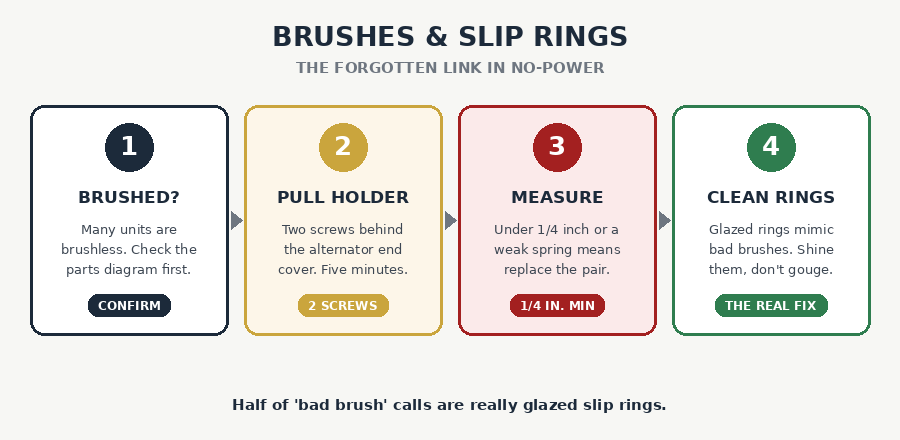
Generator Brushes and Slip Rings: Check and Replace Them
Generator brushes are small carbon blocks that feed excitation current to the spinning rotor through two copper slip rings —
No power at the outlets, tripped breakers, and voltage faults.
Generator brushes are small carbon blocks that feed excitation current to the spinning rotor through two copper slip rings —
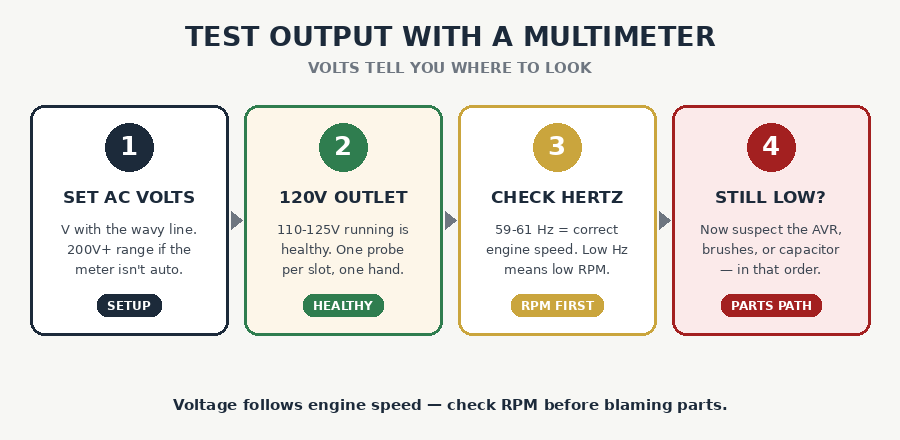
To test generator output with a multimeter, set the meter to AC volts, start the generator, and put one probe
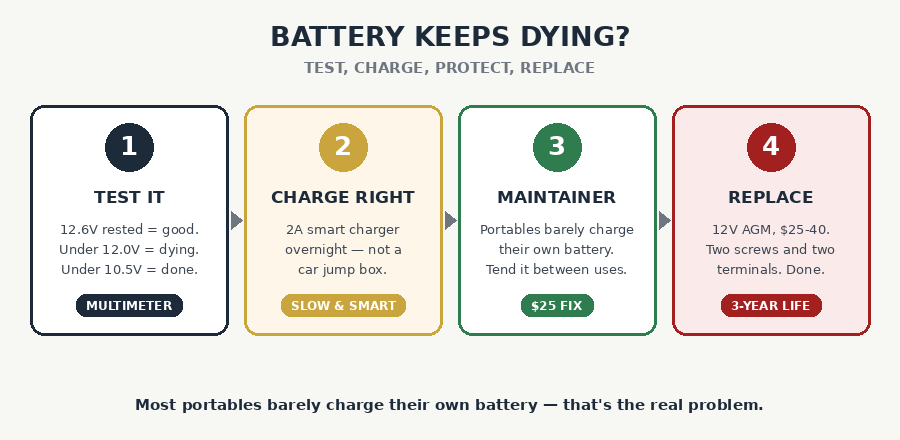
A generator battery keeps dying mostly because portable generators barely charge their own batteries — the built-in charging circuit is
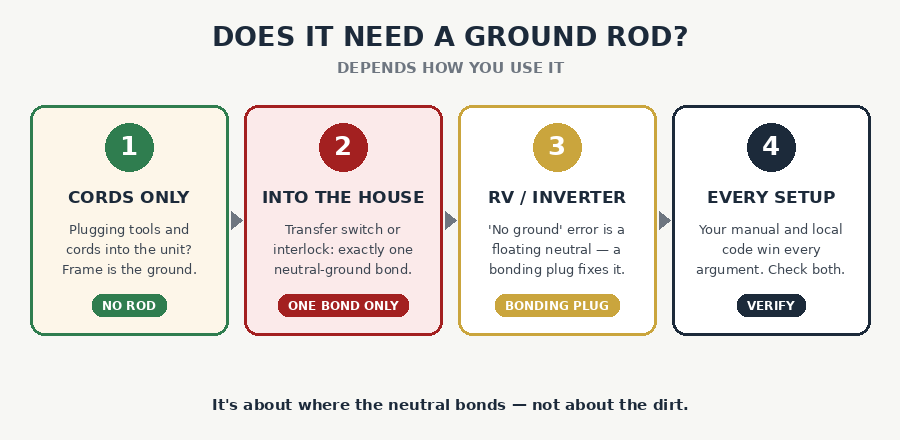
What does your setup look like? That question decides everything about grounding, so sort yourself first. Running extension cords from
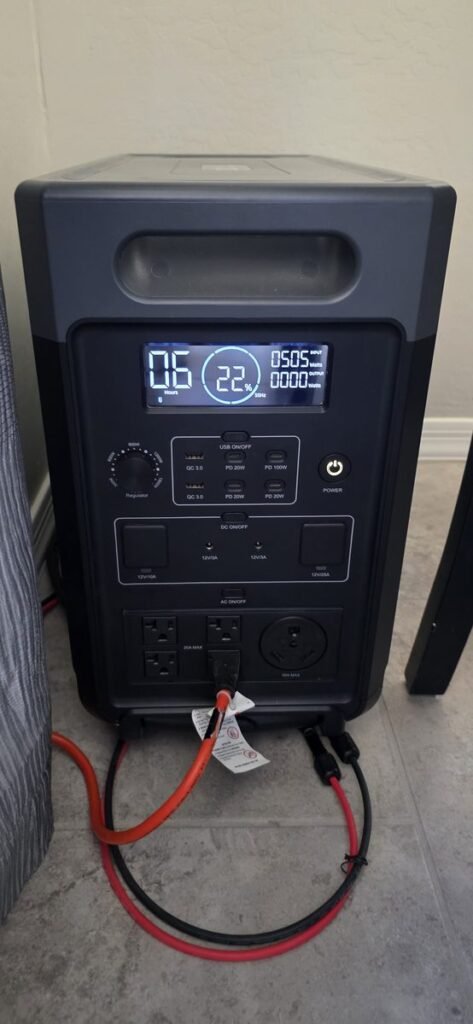
Yes, you can run a portable AC on solar. Here’s my real 4-panel setup — combiner box, 3,840Wh LiFePO4 power station, and a refurbished Midea 12,000 BTU AC — with the actual wattage numbers from the Arizona heat.
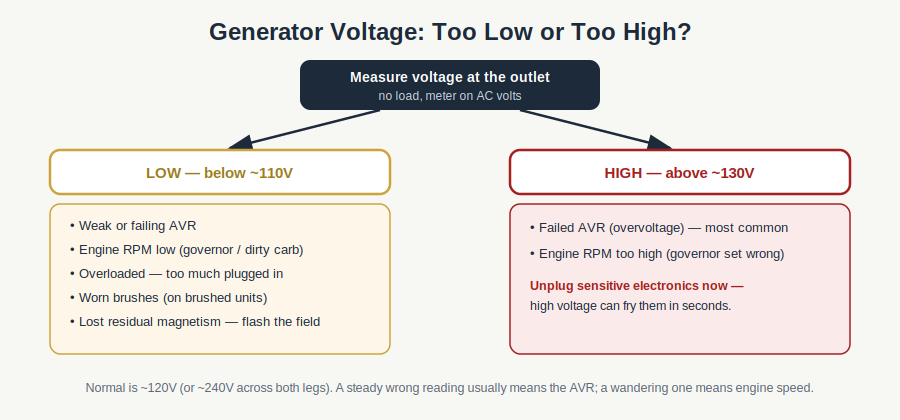
Generator putting out low or high voltage? Low points to a weak AVR, RPM, or overload; high usually means a failed AVR. Steady vs wandering tells you which.
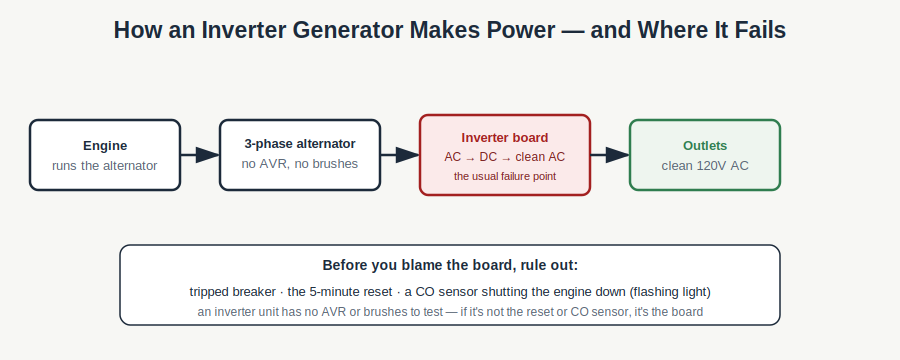
Inverter generator runs but no power? It has no AVR or brushes — here’s the reset, the flashing-light CO sensor, and when it’s the inverter board.
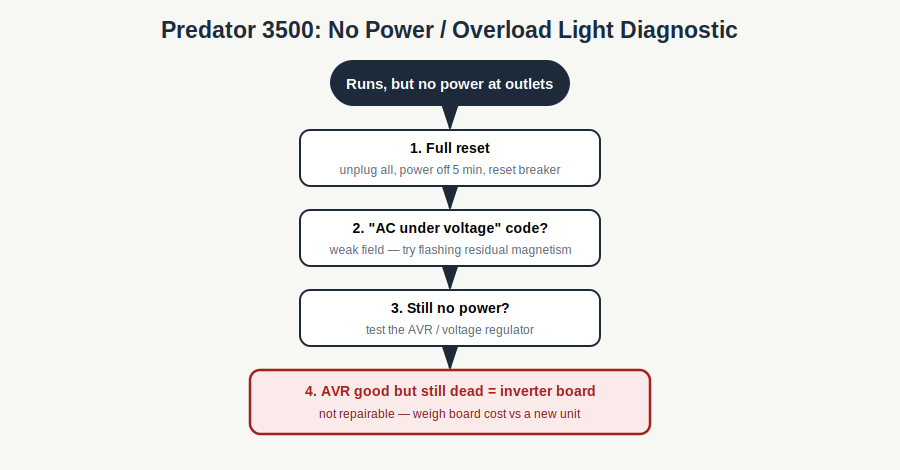
Predator 3500 problems decoded: no power and the overload light, the “AC under voltage” code, and surging — what to reset, flash, test, and replace.
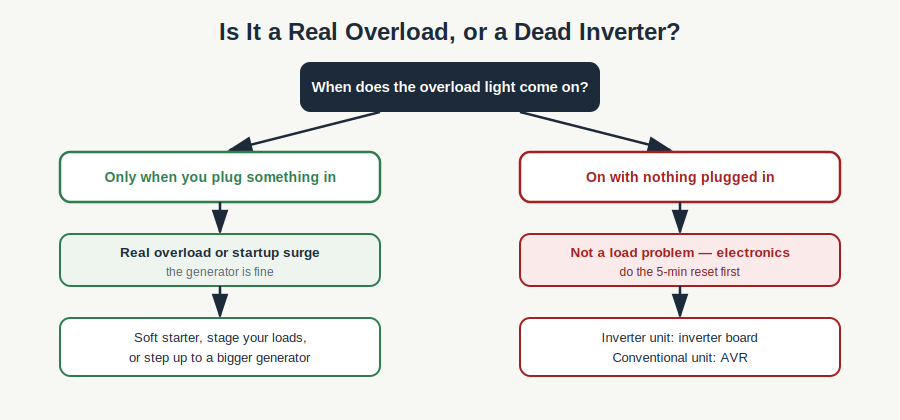
Generator overload light on with nothing plugged in? It’s not a load problem — here’s the reset, the inverter-board check, and when it’s worth fixing.

Generac generator won’t start or showing an error code? On portables it’s usually fuel; on standby units it’s often the battery, an RPM/overspeed code, or maintenance mode. Here’s how to read it.