
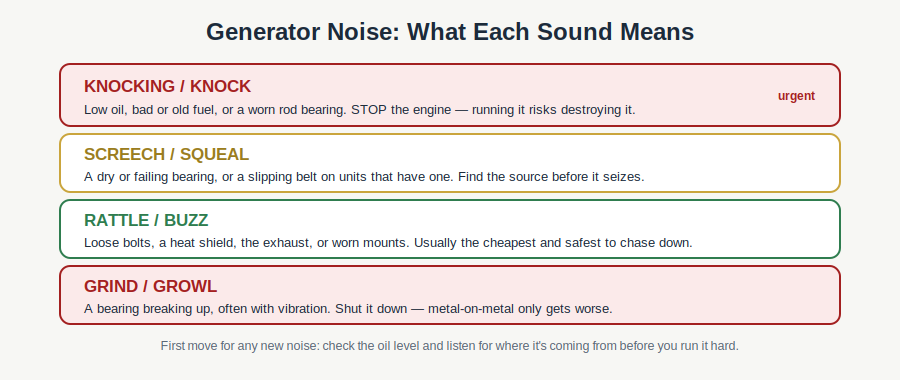
What a generator’s noise means depends on the sound. Knocking points to low oil, bad fuel, or a worn bearing — shut it off, because running it can destroy the engine. Screeching or squealing is usually a dry bearing or a slipping belt. Rattling or buzzing is typically loose hardware, a heat shield, the exhaust, or worn mounts. Grinding means a bearing is breaking up — stop immediately. For any new noise, the first move is to check the oil level and pin down where the sound is coming from before you run it hard.
- Knocking → stop now. Low oil, old/bad fuel, or a worn rod bearing. Running it risks wrecking the engine.
- Screech/squeal → a dry or failing bearing, or a slipping belt on units that have one.
- Rattle/buzz → loose bolts, heat shield, exhaust, or worn mounts — usually the cheapest fix.
- Grind/growl → shut it down. A bearing is failing; metal-on-metal only gets worse.
- First step for any new noise: check the oil level and locate the source before running it.
Why Is My Generator Making a Loud Noise?
Because something has changed mechanically, and the type of sound tells you how worried to be. A generator that’s always been loud is just a loud machine; a generator that suddenly develops a new noise is telling you something, and the smart move is to read the sound before you keep running it. Knocking and grinding sit at the dangerous end — they point to oil, fuel, or bearing problems that get rapidly worse and can turn a fixable issue into a scrap engine if you ignore them. Screeching and squealing are a step less urgent but still mean a part is failing. Rattles and buzzes are usually the friendly end of the spectrum: loose hardware or exhaust pieces you can tighten or replace cheaply. Over the years I’ve learned to stop a knocking engine the second I hear it, because the difference between catching it early and “just finishing this job” is often the difference between a cheap fix and a new generator.
Knocking: Stop and Check the Oil
A knocking or knocking-and-pinging sound is the one to take seriously immediately. The most common and most preventable cause is low oil — the engine is starving its bearings — so shut it off and check the dipstick first. Old or wrong-octane fuel can cause a knock too, as can carbon buildup. But a deep, rhythmic knock that rises with engine speed can mean a worn rod or main bearing, and that’s terminal if you keep running it. Many units have a low-oil shutoff meant to catch the oil case before damage, though it sometimes trips with oil present — see a low-oil shutoff that trips with oil full. Either way, knocking means stop, check oil, and don’t run it again until you know why.
Screeching or Squealing: A Bearing or Belt
A high-pitched screech or squeal usually comes from something spinning that shouldn’t be dry or slipping. On units with a belt, a worn or loose belt squeals, especially on startup or under load. More often on a generator it’s a bearing going dry in the engine or the alternator end, and that sound is a warning the bearing is on its way out. Locate where the noise is loudest — engine side or generator side — before you run it hard, because a bearing that screeches today can seize tomorrow and take other parts with it.
Rattling or Buzzing: Usually Loose Hardware
Good news when you hear a rattle or a tinny buzz — this is typically the cheapest and least dangerous category. Engine vibration loosens bolts over time, and a loose heat shield, exhaust component, fuel tank bracket, or worn rubber mount will rattle or buzz. Go over the unit with it off and cool, and check for loose fasteners and exhaust connections. A buzz that comes and goes with engine speed is often a resonance from one specific loose piece. Tightening hardware and replacing tired mounts usually quiets it right down. If the engine is also speeding up and down while it rattles, that surge is a separate fuel/governor issue covered in a generator that surges.
Grinding: Shut It Down
A grinding or harsh growling noise, especially with vibration you can feel, means metal is contacting metal — most often a bearing breaking apart. There’s no “run it a little longer” here; shut it down. Continuing to run a grinding engine turns a single failed bearing into a chain of destroyed parts, and the cost climbs fast. This is a stop-and-diagnose situation, and depending on what’s worn it may be a repair-versus-replace decision on the whole unit.
Treat knocking, grinding, and harsh growling as stop-now sounds — running through them can destroy the engine in minutes. Always let the generator cool and shut it off before inspecting; never reach near a hot, running engine or exhaust. And if a noise comes with the engine running hot or shutting down, that overlaps with cooling and airflow problems covered in overheating and hot shutdown. When in doubt, shut it off — diagnosing a quiet engine is always safer than chasing a noise on a running one.
What It Costs
The bill depends entirely on which sound you’ve got. A rattle is usually free to fix — a few minutes with a wrench tightening hardware, or a few dollars for new rubber mounts. A squealing belt is a cheap part. But a knocking or grinding bearing is the expensive end: by the time it makes noise, a rod or main bearing repair often costs more than a replacement portable generator is worth, which is exactly why catching a knock early — before it becomes a grind — saves the machine. The cheap insurance is keeping the oil full and stopping the instant a new deep noise shows up.
Frequently Asked Questions
Why is my generator knocking?
Most often low oil starving the bearings, or old/wrong fuel — but a deep rhythmic knock can mean a worn rod or main bearing. Shut it off and check the oil first. Don’t keep running a knocking engine; a low-oil knock you catch early is fixable, while a bearing knock you ignore can end the engine.
Is it safe to run a generator that’s making a grinding noise?
No — shut it down immediately. Grinding means metal-on-metal contact, usually a bearing breaking up, and every minute you run it spreads the damage to other parts. There’s no safe “finish the job” with a grinding engine; the cost only climbs the longer it runs.
Why is my generator rattling?
Usually loose hardware — engine vibration backs out bolts, and a loose heat shield, exhaust piece, bracket, or worn mount rattles or buzzes. With the unit off and cool, check for loose fasteners and exhaust connections and replace tired rubber mounts. It’s typically the cheapest and least worrying noise to chase.
What does a squealing generator mean?
A high-pitched squeal usually means a slipping belt on units that have one, or a bearing going dry in the engine or alternator. Pin down which end it’s coming from before running it hard. A bearing that squeals is on its way out, so it’s worth addressing before it seizes.
My generator is loud but runs fine — should I worry?
If it’s always been that loud and nothing has changed, probably not — some generators are just loud machines. What matters is a new noise: a knock, grind, or squeal that wasn’t there before is the engine telling you something. A steady old hum is fine; a new deep or harsh sound means stop and check.